Writers sometimes use similes to describe someone acting unwise, careless, or lacking good judgment. A simile compares two things using the words like or as, helping create a clear and sometimes humorous image.
Below are 20 similes related to “foolish” or foolish behavior, along with meanings and example sentences. (These are often used playfully in stories, not to seriously insult someone.)
1. As ignorant as a rock
Meaning: Acting very unintelligent.
Example: Forgetting the keys again made him feel as ignorant as a rock.
2. As silly as a goose
Meaning: Acting in a foolish or playful way.
Example: They were laughing and acting as silly as geese.
3. Like a chicken with its head cut off
Meaning: Acting in a confused and chaotic way.
Example: He ran around like a chicken with its head cut off trying to finish the work.
4. As clueless as a lost tourist
Meaning: Having no idea what to do.
Example: I felt as clueless as a lost tourist in the new class.
5. Like a fish out of water
Meaning: Completely confused or out of place.
Example: He looked like a fish out of water during the math lesson.
6. As mixed up as a scrambled egg
Meaning: Very confused.
Example: My thoughts were as mixed up as scrambled eggs.
7. Like a dog chasing its own tail
Meaning: Doing something pointless or foolish.
Example: Arguing about that problem felt like a dog chasing its own tail.
8. As foolish as a clown in a storm
Meaning: Acting without thinking.
Example: Jumping into the plan without preparation was as foolish as a clown in a storm.
9. Like a puzzle with missing pieces
Meaning: Not making sense.
Example: His explanation sounded like a puzzle with missing pieces.
10. As slow as a sleepy snail
Meaning: Thinking or reacting very slowly.
Example: He solved the riddle as slow as a sleepy snail.
11. Like wandering in a fog
Meaning: Feeling mentally unclear.
Example: After the long night, my brain felt like it was wandering in a fog.
12. As confused as a cat in a dog park
Meaning: Extremely confused.
Example: He looked as confused as a cat in a dog park.
13. Like trying to read upside down
Meaning: Hard to understand something.
Example: The instructions felt like trying to read upside down.
14. As careless as a child with crayons
Meaning: Not paying attention to details.
Example: His work looked as careless as a child with crayons.
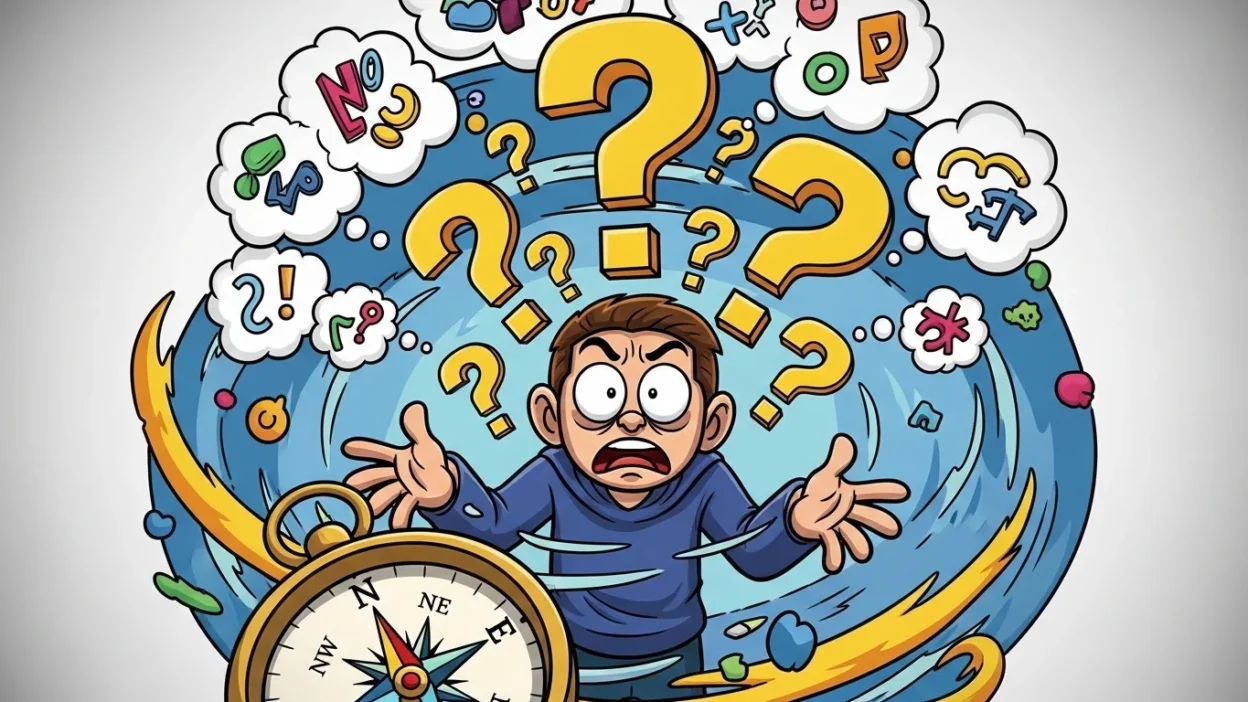
15. Like a compass spinning wildly
Meaning: Completely lost or unsure.
Example: Without guidance, he felt like a compass spinning wildly.
16. As puzzled as a monkey with a calculator
Meaning: Very confused by something complex.
Example: I felt as puzzled as a monkey with a calculator during the lecture.
17. Like a book written in another language
Meaning: Impossible to understand.
Example: The instructions looked like a book written in another language.
18. As lost as a balloon in the wind
Meaning: Completely unsure what to do.
Example: He felt as lost as a balloon in the wind.
19. Like walking into a wall in the dark
Meaning: Making an obvious mistake.
Example: Forgetting the meeting was like walking into a wall in the dark.
20. As blank as an empty page
Meaning: Having no idea or thoughts.
Example: When the teacher asked the question, my mind was as blank as an empty page.
Conclusion
Similes can make descriptions of confusion or foolish behavior more vivid and sometimes humorous. Instead of directly calling someone “foolish,” comparisons like “as clueless as a lost tourist” or “like a dog chasing its own tail” create clearer and more engaging images.
Using these similes can add personality and creativity to storytelling and everyday writing.

Robert Parker is a U.S.-based author at Aslikee who is dedicated to producing accurate and trustworthy content for readers. He focuses on presenting information in a clear and organized way, making complex topics easier to understand.
He values thorough research and careful fact-checking to ensure every piece of content meets high quality standards. Robert believes that consistency and reliability are essential for building long-term reader trust.
At Aslikee, Robert plays an important role in supporting editorial quality and content improvement. His goal is to help users access useful, well-structured information that adds real value to their experience.