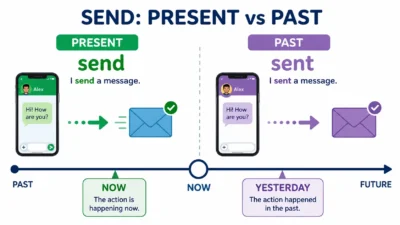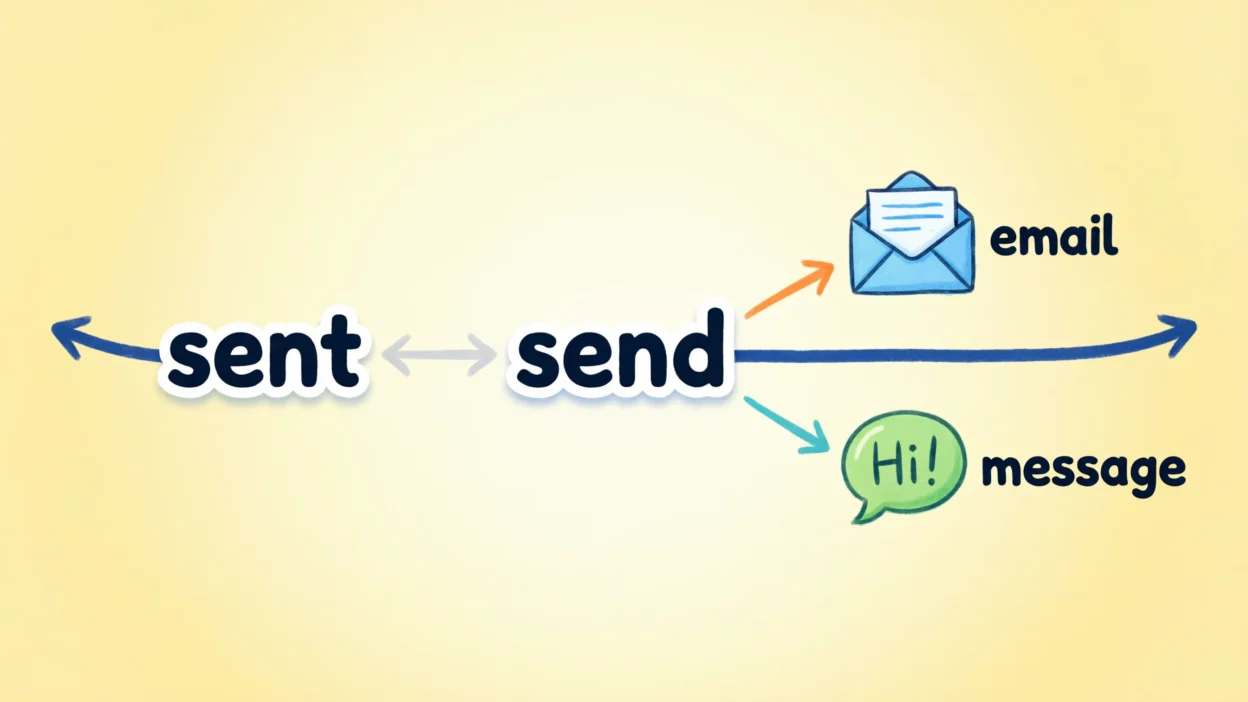
Many learners get confused between “send” and “sent.” They look similar, but they are used at different times. In simple terms, both words come from the same verb, but one is used for the present or future, and the other is used for the past.
👉 For example:
- I send messages every day.
- I sent a message yesterday.
Understanding this difference will help you write and speak more clearly. Let’s explore it step by step.
What Does “Send” Mean?
Send is the base form (present tense) of the verb.
👉 Use send when talking about:
- Something happening now
- Something that happens regularly
- Something in the future (with “will”)
Examples:
- I send emails to my teacher.
- She sends a letter every week.
- I will send you the file tomorrow.
What Does “Sent” Mean?
Sent is the past tense and past participle of send.
👉 Use sent when talking about something that already happened.
Examples:
- I sent the message yesterday.
- He sent me a gift last week.
- She has sent the email already.
Send vs Sent (Quick Comparison)
| Word | Tense | When to Use |
|---|---|---|
| Send | Present / Base | Now or regularly |
| Sent | Past | Already happened |
👉 Simple tip:
- Now → send
- Before → sent
Sentence Examples
Using “Send”
- I send homework to my teacher.
- They send messages every day.
- Please send me the details.
Using “Sent”
- I sent homework yesterday.
- They sent the package last week.
- He sent me a photo.
Common Mistakes to Avoid
❌ I send the email yesterday.
✔️ I sent the email yesterday.
❌ She sent messages every day.
✔️ She sends messages every day.
👉 Remember:
- Use sent for the past
- Use send/sends for present
Fun Practice
Fill in the blanks:
- I ______ a message yesterday.
- I ______ emails every day.
- She has ______ the file.
- Please ______ me your address.
- They ______ the parcel last week.
Answers:
- sent
- send
- sent
- send
- sent
Easy Memory Trick
👉 Think like this:
- Send = Now
- Sent = Already done
Conclusion
The difference between send and sent is all about time. Use send for present or future actions, and sent for past actions.
With practice, you’ll use them correctly without thinking. Try making your own sentences to improve faster.