Metaphors and similes are two of the most common tools writers use to create vivid and imaginative descriptions. But what is the general word that includes both of these literary devices? Let’s explore the correct terms and their meanings.
📚 The Main Word: Figurative Language
✅ Figurative Language
The most accurate and widely used term that includes both metaphors and similes is figurative language.
🔹 Definition
Figurative language refers to expressions that go beyond the literal meaning of words to create more vivid, imaginative, or impactful descriptions.
🔹 Examples
- Simile: Her smile is as bright as the sun.
- Metaphor: Her smile is the sun.
Both sentences compare a smile to the sun, but they do so in different ways, and both fall under the umbrella of figurative language.
🧠 Other Related Terms
While figurative language is the most common umbrella term, several other words and phrases can also refer to metaphors and similes depending on the context.
1. Figures of Speech
✅ Definition
A figure of speech is a rhetorical device that uses words in a non-literal way to achieve a special effect or meaning.
🔹 Why It Fits
Both metaphors and similes are classic examples of figures of speech.
🔹 Examples
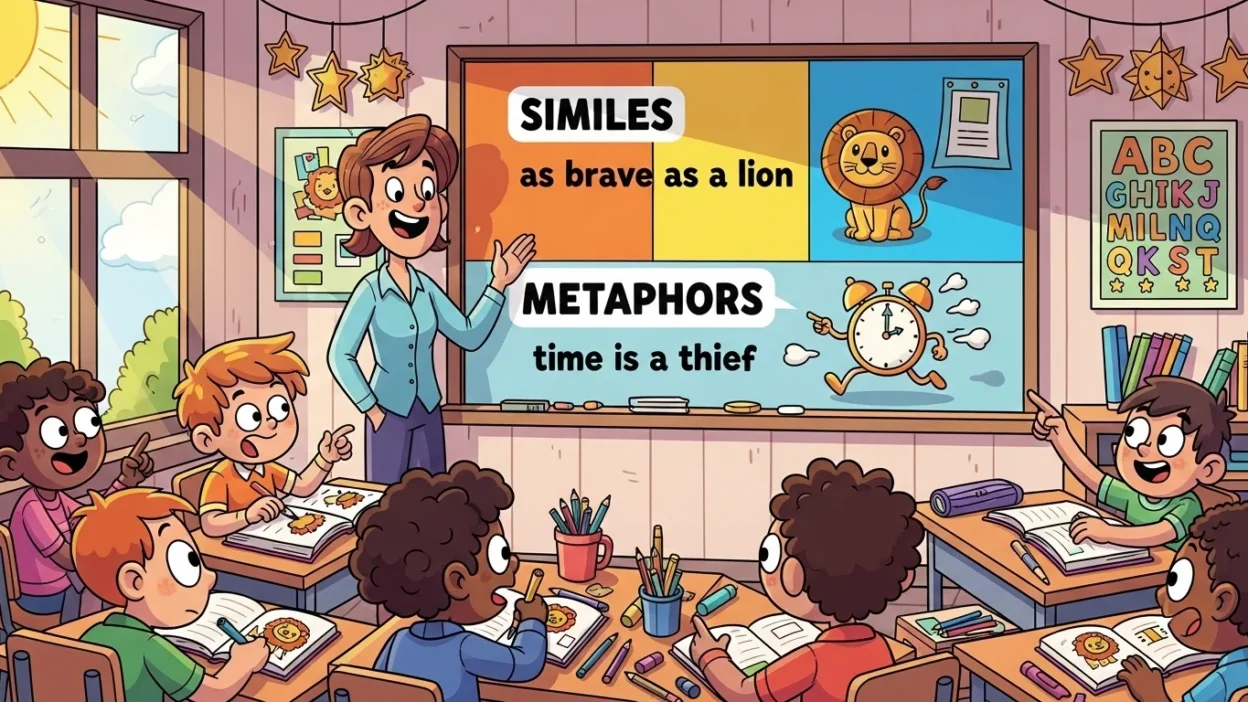
- Time is a thief. (Metaphor)
- He runs like the wind. (Simile)
👉 Note: “Figure of speech” and “figurative language” are often used interchangeably.
2. Comparative Figurative Devices
This is a more specific descriptive term rather than a commonly used label. It emphasizes that both metaphors and similes involve comparison, though it is not a standard textbook term.
3. Analogies
✅ Definition
An analogy is a broader comparison used to explain or clarify an idea. Both similes and metaphors can function as analogies, but not all analogies are similes or metaphors.
🔹 Example
- Just as a key opens a door, education opens opportunities.
👉 Key Point:
- Similes and metaphors are types of analogies, but analogy is a broader concept.
📊 Quick Comparison Table
| Term | Includes Metaphors & Similes? | Usage |
|---|---|---|
| Figurative Language | ✅ Yes | Most common umbrella term |
| Figures of Speech | ✅ Yes | Formal and academic contexts |
| Analogy | ✅ Sometimes | Broader explanatory comparisons |
| Literary Devices | ✅ Yes | Includes many other techniques |
📝 Definitions of Simile and Metaphor
🌟 Simile
A simile compares two unlike things using the words “like” or “as.”
Example:
The baby is as quiet as a mouse.
🌟 Metaphor
A metaphor makes a direct comparison between two unlike things without using “like” or “as.”
Example:
The classroom was a zoo.
🎯 When to Use Each Term
- Figurative Language: Best for general discussions, teaching, and writing.
- Figure of Speech: Suitable for academic or formal contexts.
- Analogy: Useful when explaining complex ideas through comparison.
- Literary Device: Appropriate when discussing a wide range of writing techniques.
📝 Example Sentences Using the Terms
- The poem uses figurative language, including similes and metaphors.
- “Time is a thief” is a powerful figure of speech.
- The teacher used an analogy to explain the concept.
- Similes and metaphors are common literary devices in poetry.
🏁 Conclusion
The most accurate and commonly used word for metaphors and similes is figurative language. Another equally correct term is figures of speech, while analogy and literary devices can also apply in broader contexts.
✅ Key Takeaways
- Figurative Language – The best umbrella term.
- Figures of Speech – A formal synonym.
- Analogy – A broader comparison that may include similes and metaphors.
- Literary Devices – A wider category encompassing many techniques.

Nick Mateo is a U.S.-based content writer at Aslikee who focuses on creating clear, reliable, and user-friendly content. He is passionate about delivering information that is easy to understand and genuinely helpful for readers.
He spends significant time researching topics to ensure accuracy and relevance. Nick believes that high-quality content is built on trust, transparency, and consistency, and he applies these principles in every article he works on.
At Aslikee, Nick contributes to maintaining strong editorial standards and improving the overall quality of the platform. His goal is to support users with well-structured, value-driven content that meets their needs.