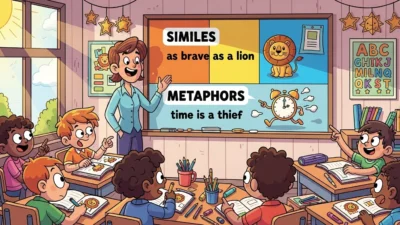
Poetry is a magical way to express thoughts and feelings, and similes make poems even more colorful and imaginative. For kids, similes are an excellent introduction to figurative language because they are simple, fun, and easy to understand. By comparing one thing to another using the words “like” or “as,” similes help children create vivid pictures in their minds.
This guide explores similes in poems for kids, offering clear explanations, examples, and original poems that can be used in classrooms or at home.
📖 What Is a Simile?
A simile is a figure of speech that compares two different things using the words “like” or “as.” It helps readers imagine what something looks, sounds, or feels like.
🌟 Simple Examples
- As bright as the sun
- As busy as a bee
- As quiet as a mouse
- Like a feather in the wind
📝 Example Sentence
Her smile was as bright as the sun, lighting up the room.
🎯 Why Use Similes in Poems for Kids?
Similes are especially effective in children’s poetry because they:
- Enhance imagination by creating vivid mental images.
- Improve vocabulary and language skills.
- Make poems more engaging and memorable.
- Help children understand emotions and descriptions.
- Encourage creativity in writing.
🌈 Common Similes Used in Kids’ Poems
Here are some popular and easy-to-understand similes often found in children’s poetry:
- As busy as a bee
- As brave as a lion
- As quiet as a mouse
- As light as a feather
- As bright as the sun
- As gentle as a lamb
- As fast as lightning
- As happy as a lark
- As soft as cotton
- As white as snow
📝 Original Poems with Similes for Kids
🌞 1. Sunny Day
The sun is as bright as gold,
Its warmth chases away the cold.
The breeze is as gentle as a sigh,
As fluffy clouds drift slowly by.
Birds sing like a cheerful tune,
Dancing lightly in the afternoon.
Children laugh and run in play,
As happy as larks on a sunny day.
🐱 2. The Little Kitten
A kitten curls up on the mat,
As soft as cotton, imagine that!
It leaps and pounces in a flash,
As quick as lightning in its dash.
Its purr is like a gentle song,
A soothing rhythm all day long.
With sparkling eyes so full of light,
It sleeps like a baby through the night.
🌧️ 3. Rainy Adventure
Raindrops fall like silver beads,
Watering flowers and tiny seeds.
The thunder rumbles like a drum,
While children watch from home, safe and warm.
Puddles shine like mirrors bright,
Reflecting clouds of softest white.
When rainbows appear across the sky,
They arch like smiles way up high.
🏫 4. School Time
The school bell rings like a cheerful chime,
Calling us in right on time.
Friends gather like birds in a tree,
Sharing laughter and energy.
Our teacher is as wise as an owl,
Helping us learn and grow each hour.
With books that open worlds anew,
Each day brings something fun to do.
🎨 Types of Similes in Kids’ Poetry
1. Nature Similes
- As bright as the sun
- Like a rainbow in the sky
- As gentle as the breeze
2. Animal Similes
- As busy as a bee
- As brave as a lion
- As quiet as a mouse
3. Emotion Similes
- As happy as a lark
- As calm as a still lake
- As excited as a puppy
4. Object Similes
- As soft as cotton
- As light as a feather
- Like a shining star
🎲 Fun Classroom Activities
1. Simile Hunt
Ask children to find similes in their favorite poems or storybooks and share them with the class.
2. Fill-in-the-Blank Poems
Provide poem templates with missing similes for students to complete.
3. Illustrate a Simile
Students draw pictures representing similes from poems, reinforcing comprehension through art.
4. Create a Class Poem
Each student contributes one line with a simile to create a collaborative poem.
✍️ Tips for Writing Simile Poems for Kids
- Use Simple Language: Choose familiar words and comparisons.
- Incorporate Rhythm and Rhyme: This makes poems more enjoyable.
- Draw from Everyday Experiences: Relatable imagery helps understanding.
- Encourage Creativity: Allow children to invent their own similes.
- Keep It Short and Fun: Short poems maintain engagement.
📚 Benefits of Learning Similes Through Poetry
- Enhances creativity and imagination
- Improves reading and writing skills
- Builds emotional expression
- Strengthens vocabulary
- Encourages a love for poetry
🏁 Conclusion
Similes play a vital role in making poems for kids lively, colorful, and memorable. By comparing everyday experiences to familiar images, similes help children better understand language and express their thoughts creatively. The examples and original poems in this guide provide a valuable resource for teachers, parents, and young learners.
Encouraging children to read and write simile rich poems not only enhances their language skills but also fosters imagination and a lifelong appreciation for poetry

Robert Parker is a U.S.-based author at Aslikee who is dedicated to producing accurate and trustworthy content for readers. He focuses on presenting information in a clear and organized way, making complex topics easier to understand.
He values thorough research and careful fact-checking to ensure every piece of content meets high quality standards. Robert believes that consistency and reliability are essential for building long-term reader trust.
At Aslikee, Robert plays an important role in supporting editorial quality and content improvement. His goal is to help users access useful, well-structured information that adds real value to their experience.