Comradery or camaraderie both describe friendly trust and teamwork, but knowing the preferred spelling helps you write more naturally every time. Both comradery and camaraderie are technically correct and share the same meaning, expressing a spirit of friendly fellowship and trust. From my experience, camaraderie is the traditional, widely preferred, standard spelling, making it the better choice for formal writing.
The spelling comradery is an acceptable variant derived from comrade, but it is much less common in books, articles, and professional communication. Understanding this small difference helps you choose the right spelling that best fits your audience and supports understanding the preferred spelling.
Quick Answer
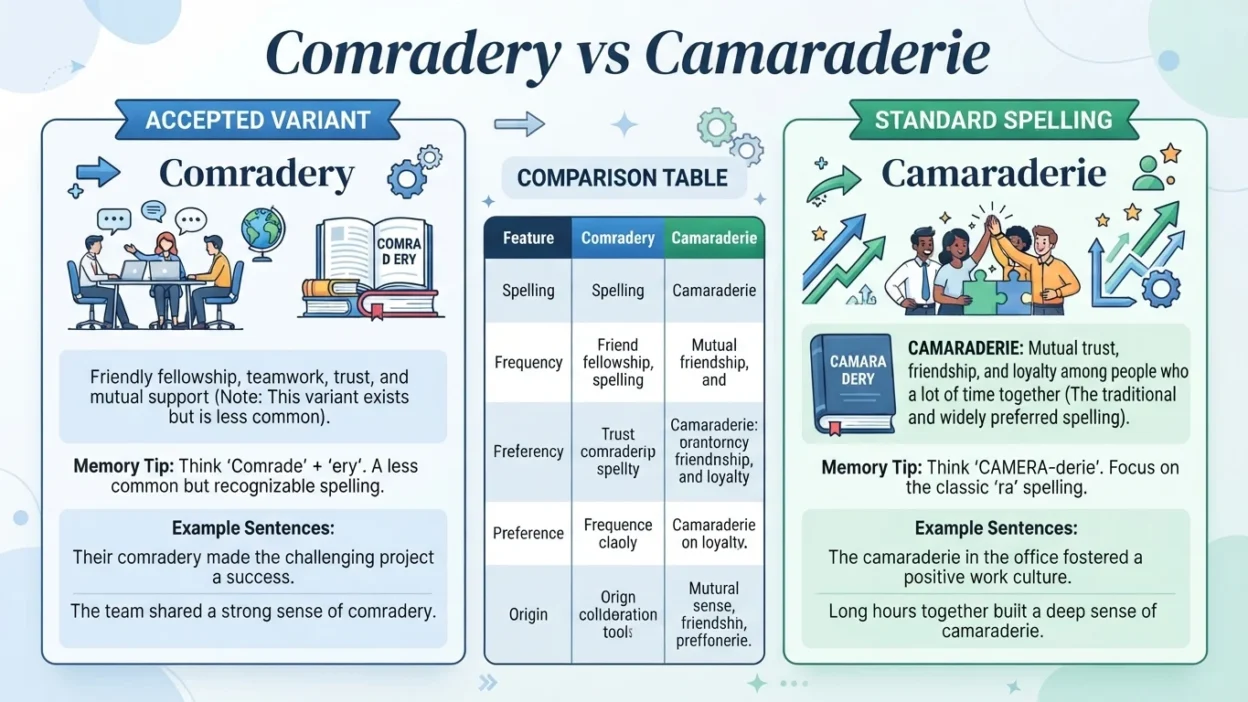
| Feature | Comradery | Camaraderie |
|---|---|---|
| Is it a real word? | Yes | Yes |
| Most common spelling | No | Yes |
| Formal writing | Rarely preferred | Recommended |
| Origin | From “comrade” | Borrowed from French |
| Meaning | Friendly fellowship and trust | Friendly fellowship and trust |
| Dictionary acceptance | Accepted variant | Standard spelling |
What Do Comradery and Camaraderie Mean?
Both comradery and camaraderie describe a feeling of friendship, teamwork, mutual trust, and strong support between people.
You often hear these words when talking about sports teams, military groups, workplaces, schools, or any environment where people work closely together.
In simple words, camaraderie means enjoying a strong bond with others while supporting each other through shared experiences.
Which Spelling Is Correct?
Technically, both spellings are correct.
However, camaraderie is considered the traditional and standard spelling in modern English. It appears much more often in books, newspapers, academic writing, and professional communication.
Comradery is an accepted alternative spelling, but it is much less common.
If you’re unsure which version to use, camaraderie is usually the safest option.
Why Is Camaraderie More Popular?
The popularity of camaraderie comes from its long history and widespread acceptance.
Most dictionaries, style guides, editors, teachers, and professional writers recommend camaraderie because readers immediately recognize it.
Although comradery developed naturally from the word comrade, it never became the dominant spelling.
| Comparison | Camaraderie | Comradery |
|---|---|---|
| Traditional spelling | ✅ | ❌ |
| Most dictionaries | ✅ | ✅ |
| Professional writing | Preferred | Less common |
| Academic writing | Preferred | Rare |
| Everyday recognition | Very High | Moderate |
Origin of the Words
The word camaraderie entered English from the French language.
It ultimately traces back to comrade, a word referring to a companion, teammate, or trusted friend.
Later, some English writers began using comradery because it looked more closely related to comrade. Although this spelling is accepted, it never replaced the traditional version.
When Should You Use Camaraderie?
In most situations, camaraderie is the better choice.
Use it in:
- Business writing
- School assignments
- Books
- Blog articles
- Professional emails
- Academic papers
- Formal speeches
Choosing the standard spelling helps your writing appear polished and professional.
When Can You Use Comradery?
Although comradery is a real word, it appears much less often in modern writing.
You may see it in personal blogs, informal writing, creative works, or older publications. Some writers simply prefer the spelling because it clearly relates to the word comrade.
If your audience expects formal English, camaraderie is usually the safer option.
Comradery vs Camaraderie Comparison
| Feature | Comradery | Camaraderie |
|---|---|---|
| Meaning | Friendly fellowship and trust | Friendly fellowship and trust |
| Standard spelling | No | Yes |
| Accepted by dictionaries | Yes | Yes |
| Used in formal writing | Rarely | Frequently |
| Common in books | Less common | Very common |
| Best for professional writing | Not usually | Yes |
Examples in Everyday Sentences
Seeing words in context makes them easier to remember.
Correct Examples
- The team’s camaraderie helped everyone stay motivated during the tournament.
- Strong camaraderie between coworkers created a positive work environment.
- Years of training built lasting camaraderie among the firefighters.
- The hiking group developed wonderful camaraderie after several trips together.
- Although comradery is accepted, many editors would still change it to camaraderie.
Common Mistakes to Avoid
Many writers accidentally assume that comradery must be correct because it comes from comrade.
That assumption is understandable, but English often keeps older spellings even when newer-looking alternatives appear.
Avoid these mistakes:
- Using comradery in formal documents without checking your style guide.
- Assuming comradery is the only correct spelling.
- Thinking camaraderie is a spelling mistake.
- Mixing both spellings within the same article.
Real-Life Examples
You can find camaraderie in many situations:
- Sports teams celebrating a championship.
- Military personnel building trust during training.
- Office coworkers working toward a shared goal.
- Volunteers helping their community.
- Students completing group projects.
In all of these situations, the word describes friendship, cooperation, trust, and teamwork.
Interesting Facts
Here are a few interesting facts about these spellings:
| Fact | Explanation |
|---|---|
| Both words are correct | Dictionaries recognize both spellings. |
| One is far more common | Camaraderie appears much more frequently in published writing. |
| Same meaning | Both describe friendship, trust, and fellowship. |
| French influence | Camaraderie entered English from French. |
| Editors prefer one | Most editors recommend camaraderie for consistency and readability. |
Future Outlook
Language continues to evolve, but camaraderie is expected to remain the dominant spelling.
Because publishers, educational institutions, and style guides consistently recommend it, most readers will continue recognizing it as the standard form. While comradery is unlikely to disappear completely, it will probably remain an uncommon alternative.
Frequently Asked Questions
Is it comradery or camaraderie?
Both spellings are technically correct, but camaraderie is the standard and widely preferred spelling. It is the best choice for formal and professional writing.
Why is camaraderie more common than comradery?
Camaraderie has been the traditional spelling for many years and appears far more often in books, dictionaries, newspapers, and academic writing. Most editors and style guides recommend using it.
Does comradery have the same meaning as camaraderie?
Yes. Both words describe a spirit of friendly fellowship, teamwork, mutual trust, and strong relationships between people who share common experiences.
Can I use comradery in formal writing?
You can, because it is an accepted variant. However, camaraderie is generally the safer and more professional choice for essays, business documents, and publications.
How can I remember the correct spelling?
A simple trick is to remember that camaraderie is the spelling you will most often see in books, articles, and dictionaries. If you’re unsure, choose camaraderie.
Final Thoughts
Choosing between comradery or camaraderie is easier once you understand the difference. While both spellings share the same meaning, camaraderie is the traditional, standard, and most widely accepted form in modern English. Comradery remains an acceptable variant, but because it appears much less often, using camaraderie is the best way to ensure your writing looks polished, professional, and familiar to readers.

Robert Parker is a U.S.-based author at Aslikee who is dedicated to producing accurate and trustworthy content for readers. He focuses on presenting information in a clear and organized way, making complex topics easier to understand.
He values thorough research and careful fact-checking to ensure every piece of content meets high quality standards. Robert believes that consistency and reliability are essential for building long-term reader trust.
At Aslikee, Robert plays an important role in supporting editorial quality and content improvement. His goal is to help users access useful, well-structured information that adds real value to their experience.