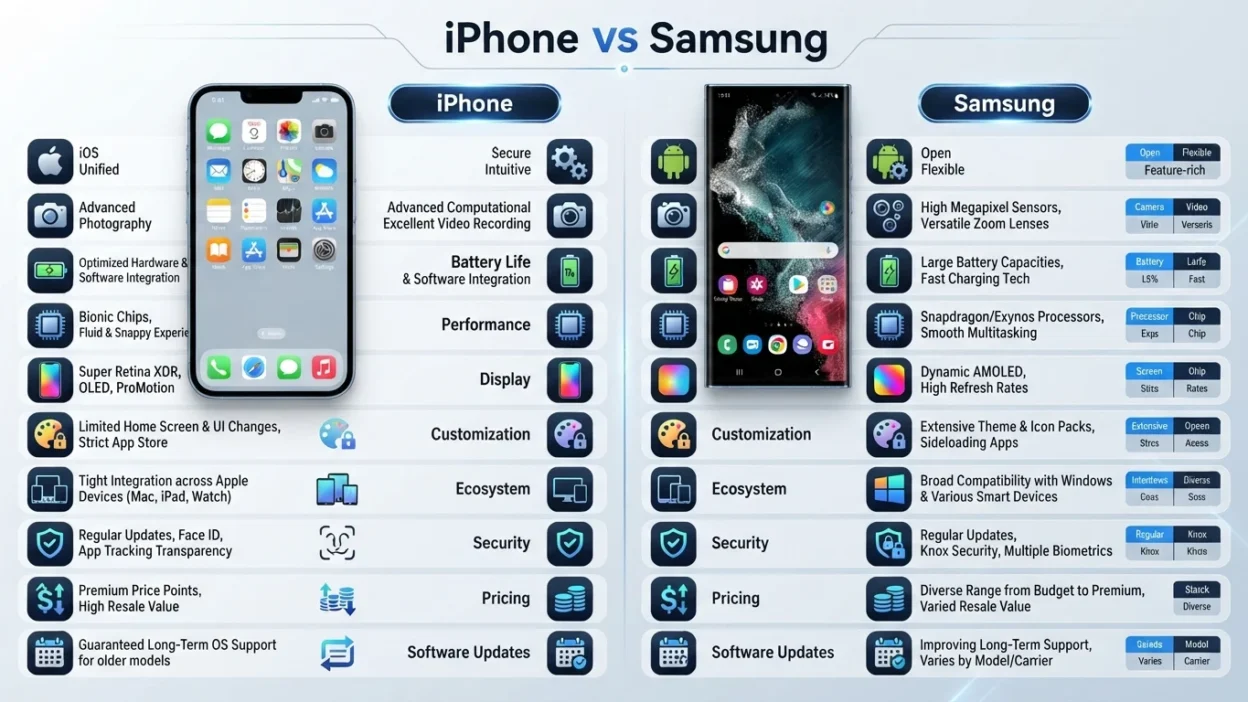
Choosing between iPhone or Samsung is one of the biggest decisions when buying a new smartphone. Both brands make excellent devices, but they offer different experiences depending on your needs, budget, and personal preferences.
Some people love the simplicity of Apple’s iPhone, while others prefer Samsung’s flexibility and wide range of Android phones. Neither brand is objectively better for everyone—the right choice depends on how you use your phone every day.
In this guide, you’ll compare iPhone or Samsung across design, cameras, software, battery life, gaming, security, pricing, and more to help you decide which one fits you best.
Quick Answer
| Feature | iPhone | Samsung |
|---|---|---|
| Operating system | iOS | Android (One UI) |
| Best for | Apple ecosystem, simplicity | Customization, variety |
| Camera | Excellent photos and videos | Excellent zoom and versatility |
| Price range | Mid-range to premium | Budget to ultra-premium |
| Software updates | Long-term, consistent | Long-term on many flagship models |
| Customization | Limited | Extensive |
iPhone vs Samsung: What’s the Main Difference?
The biggest difference is the operating system.
An iPhone runs Apple’s iOS, while a Samsung phone runs Android with Samsung’s One UI interface.
If you already own Apple products like a MacBook, iPad, or Apple Watch, an iPhone usually integrates more smoothly. If you like customizing your phone or choosing from many models, Samsung offers greater flexibility.
Design and Build Quality
Both companies produce premium smartphones with durable materials and modern designs.
Apple focuses on a clean, consistent design language across all iPhones. Samsung offers a wider variety of designs, including traditional smartphones, foldable devices, and large-screen flagship models.
| Design Feature | iPhone | Samsung |
|---|---|---|
| Premium materials | ✅ | ✅ |
| Foldable phones | ❌ | ✅ |
| Color options | Good | Excellent |
| Design consistency | Excellent | Wide variety |
Display Comparison
Samsung has long been known for producing some of the world’s best smartphone displays.
Its flagship phones often feature vibrant AMOLED screens with high refresh rates and excellent brightness. Apple’s displays are also outstanding, offering accurate colors, smooth scrolling, and impressive brightness on recent models.
For everyday use, both brands provide an excellent viewing experience.
Camera Quality
Camera performance is one of the biggest reasons people compare iPhone or Samsung.
Apple focuses on natural-looking photos, reliable colors, and industry-leading video recording.
Samsung emphasizes versatility with powerful zoom lenses, high-resolution sensors, and advanced camera features.
| Camera Feature | iPhone | Samsung |
|---|---|---|
| Video recording | Excellent | Excellent |
| Portrait mode | Excellent | Excellent |
| Zoom | Very good | Outstanding |
| Night photography | Excellent | Excellent |
| Selfie camera | Excellent | Excellent |
Software Experience
Apple’s iOS is known for being simple, smooth, and easy to learn.
Samsung’s One UI adds many useful features on top of Android, including advanced multitasking, split-screen support, customization options, and productivity tools.
If you enjoy changing themes, icons, widgets, and layouts, Samsung offers much more freedom.
Performance and Speed
Both iPhone and Samsung offer excellent performance, especially in their flagship models.
Apple designs its own processors, which are known for fast performance, smooth animations, and excellent power efficiency. Samsung’s premium Galaxy devices use powerful flagship chips that easily handle gaming, multitasking, and demanding apps.
For most users, both brands feel incredibly fast in daily use.
| Performance Feature | iPhone | Samsung |
|---|---|---|
| Everyday speed | Excellent | Excellent |
| Gaming | Excellent | Excellent |
| Multitasking | Very Good | Excellent |
| App optimization | Excellent | Very Good |
Battery Life and Charging
Battery life depends on the specific model, but both brands now offer phones that easily last a full day for most users.
Samsung generally provides faster wired charging on many devices. Apple focuses more on battery efficiency and reliable battery health over time.
| Battery Feature | iPhone | Samsung |
|---|---|---|
| All-day battery | ✅ | ✅ |
| Fast charging | Good | Excellent |
| Wireless charging | ✅ | ✅ |
| Battery optimization | Excellent | Very Good |
Security and Privacy
Apple has built a strong reputation for user privacy. iPhones include features designed to give users more control over app permissions and personal data.
Samsung also offers strong security with features like Samsung Knox, secure folders, biometric authentication, and regular security updates.
Both companies take security seriously, making either choice a safe option for most users.
Ecosystem and Connectivity
Your other devices can influence whether an iPhone or Samsung is the better choice.
If you already use:
- MacBook
- iPad
- Apple Watch
- AirPods
an iPhone offers seamless integration.
If you use:
- Windows PC
- Galaxy Watch
- Galaxy Buds
- Samsung Tablet
- SmartThings smart home devices
Samsung often provides a smoother connected experience.
Price Comparison
One major advantage of Samsung is the wide variety of phones available.
Apple mainly sells premium devices, while Samsung offers everything from budget-friendly models to ultra-premium flagships and foldable phones.
| Price Category | iPhone | Samsung |
|---|---|---|
| Budget | Limited | Excellent |
| Mid-range | Good | Excellent |
| Premium | Excellent | Excellent |
| Foldable phones | No | Yes |
Real-Life Examples
Choosing between iPhone or Samsung often comes down to lifestyle.
- A content creator who records lots of videos may appreciate the iPhone’s consistent video quality.
- Someone who enjoys customizing every part of their phone may prefer Samsung.
- Business users often like Samsung’s multitasking tools.
- Families using several Apple devices usually benefit from Apple’s connected ecosystem.
From my experience, neither brand disappoints. The best choice depends on what matters most to you—simplicity, customization, budget, or integration with your other devices.
Interesting Facts
- Samsung manufactures display panels used in many smartphones, including some iPhones.
- Apple develops its own iOS operating system exclusively for iPhones.
- Samsung produces one of the largest Android phone lineups in the world.
- Apple releases only a limited number of iPhone models each year, making its lineup easier to choose from.
- Both companies invest heavily in artificial intelligence, camera improvements, and long-term software support.
Future Outlook
The competition between iPhone and Samsung is expected to become even stronger in the coming years. Both companies are investing heavily in artificial intelligence (AI), improved cameras, faster processors, better battery life, and smarter software features.
Samsung is likely to continue leading in foldable phone technology and display innovation, while Apple is expected to focus on deeper ecosystem integration, privacy, and AI-powered features. No matter which brand you choose, future smartphones will become faster, smarter, and more capable.
Frequently Asked Questions
Is iPhone better than Samsung?
Neither is universally better. iPhone is ideal for users who value simplicity, long-term software support, and the Apple ecosystem. Samsung is a great choice for users who want more customization, a wider range of devices, and advanced hardware features.
Which phone has the better camera?
Both brands have excellent cameras. iPhones are widely praised for natural-looking photos and outstanding video recording, while Samsung phones often stand out for powerful zoom capabilities and versatile camera options.
Which lasts longer, iPhone or Samsung?
Both brands produce durable phones with several years of software support. How long a phone lasts also depends on usage, battery care, and keeping the device updated.
Is Samsung cheaper than iPhone?
In many cases, yes. Samsung offers phones across budget, mid-range, premium, and foldable categories. Apple mainly focuses on mid-range and premium devices.
Should I switch from iPhone to Samsung?
If you want greater customization, more hardware choices, or Android features, switching to Samsung may be worthwhile. If you’re deeply invested in the Apple ecosystem, staying with an iPhone may provide a smoother overall experience.
Final Thoughts
Choosing between iPhone or Samsung isn’t about finding one perfect winner—it’s about finding the phone that best matches your needs. If you want a simple, polished experience with seamless integration across Apple devices, an iPhone is an excellent option. If you prefer flexibility, customization, a wider range of models, and innovative hardware like foldable phones, Samsung is a strong choice. Both brands deliver high-quality smartphones, so you can feel confident whichever one you choose.

Robert Parker is a U.S.-based author at Aslikee who is dedicated to producing accurate and trustworthy content for readers. He focuses on presenting information in a clear and organized way, making complex topics easier to understand.
He values thorough research and careful fact-checking to ensure every piece of content meets high quality standards. Robert believes that consistency and reliability are essential for building long-term reader trust.
At Aslikee, Robert plays an important role in supporting editorial quality and content improvement. His goal is to help users access useful, well-structured information that adds real value to their experience.