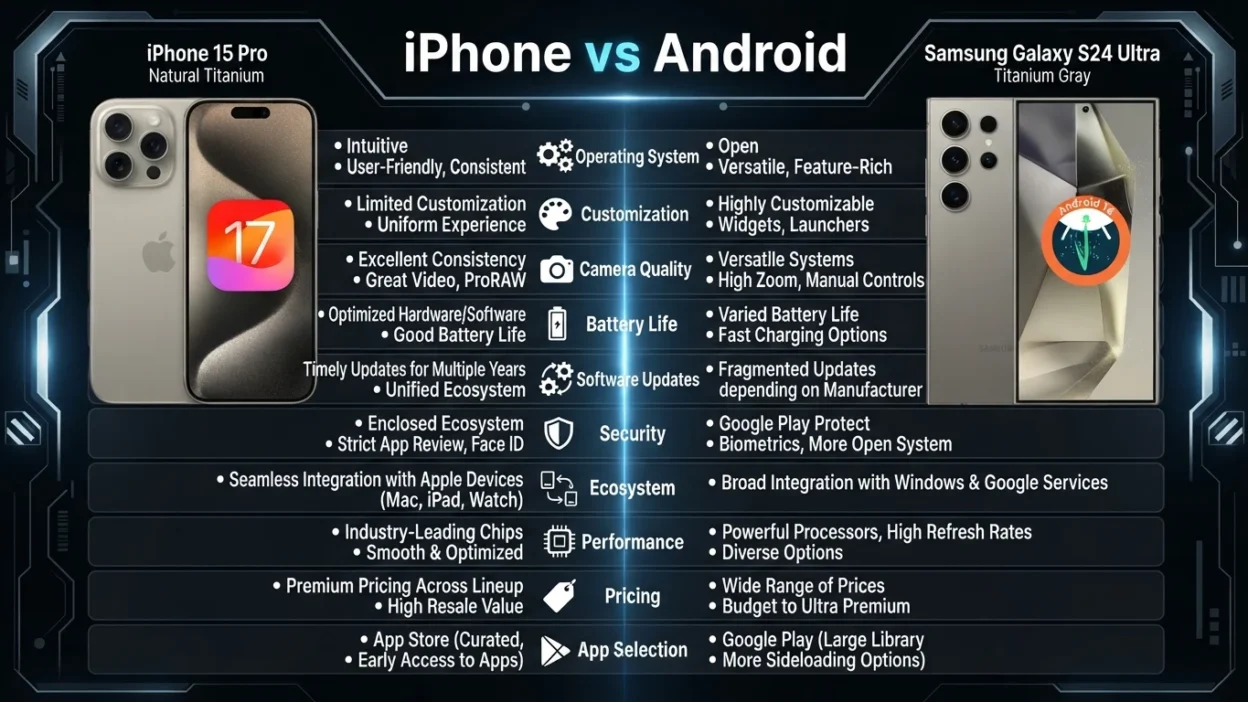
iPhone or Android depends on your personal tech ecosystem, budget, preference, and daily needs, helping you make the smartest smartphone choice today. From my experience, the choice often boils down to whether you value simplicity or customization. Many people prefer iPhones because they work smoothly with Macs, iPads, and Apple through seamless device integration, making daily tasks much easier.
Another important factor is how you use your phone every day. iPhone users enjoy longer software support and excellent video recording, while Android devices offer superior customization, better multitasking, and a wider range of pricing options. Before buying, think about your daily habits so you can make a smarter decision when choosing the right smartphone.
Quick Answer
| Feature | iPhone | Android |
|---|---|---|
| Operating System | iOS | Android |
| Best For | Simplicity, Apple ecosystem | Customization, variety |
| Price Range | Mid-range to premium | Budget to premium |
| Customization | Limited | Extensive |
| Software Updates | Long-term, consistent | Varies by manufacturer |
| Device Choices | Limited models | Hundreds of models |
| App Store | Apple App Store | Google Play Store |
What Is the Difference Between iPhone and Android?
The biggest difference is the operating system.
An iPhone runs Apple’s iOS, while Android phones run Google’s Android operating system. Companies such as Samsung, Google Pixel, OnePlus, Xiaomi, Motorola, and many others build Android phones.
Apple controls both the hardware and software of the iPhone, creating a very consistent experience. Android gives manufacturers more freedom, which results in a much wider variety of phones.
Design and Build Quality
Both iPhone and Android phones offer excellent designs.
Apple keeps its design language consistent across every iPhone generation. Android manufacturers experiment more with different screen sizes, foldable phones, colors, and materials.
| Design Feature | iPhone | Android |
|---|---|---|
| Premium build | ✅ | ✅ |
| Foldable phones | ❌ | ✅ |
| Variety of designs | Moderate | Excellent |
| Compact options | Good | Good |
User Experience
One reason many people choose an iPhone is its simple and clean interface.
Everything works in a predictable way, making it easy for beginners.
Android, on the other hand, allows users to personalize almost everything. You can change launchers, themes, widgets, icons, keyboards, and default apps with ease.
Performance and Speed
Modern smartphones from both platforms are incredibly fast.
Apple designs its own processors, which are known for excellent speed and efficiency. High-end Android phones also use powerful processors that handle gaming, multitasking, and demanding apps without problems.
For everyday activities like browsing, messaging, watching videos, and social media, both platforms perform exceptionally well.
Software Updates
Software updates are important because they improve security and add new features.
Apple releases updates to supported iPhones at the same time worldwide.
Android updates depend on the phone manufacturer. Premium Android brands now offer several years of updates, although budget phones may receive fewer updates.
| Software Feature | iPhone | Android |
|---|---|---|
| Update consistency | Excellent | Good |
| Security patches | Excellent | Very Good |
| Long-term support | Excellent | Varies |
| New feature rollout | Simultaneous | Manufacturer dependent |
Camera Comparison
The camera is one of the biggest reasons people compare iPhone or Android.
Apple focuses on natural colors, reliable image processing, and industry-leading video recording. Android phones vary by manufacturer, but many flagship models offer excellent photography, powerful zoom lenses, high-resolution sensors, and AI-powered camera features.
| Camera Feature | iPhone | Android |
|---|---|---|
| Photo quality | Excellent | Excellent |
| Video recording | Excellent | Very Good to Excellent |
| Zoom | Very Good | Excellent (many flagship models) |
| Night photography | Excellent | Excellent |
| AI camera features | Good | Excellent |
Battery Life and Charging
Battery performance depends on the phone model, but both platforms easily last a full day for most users.
Many Android phones support faster wired charging than iPhones. Apple focuses more on battery efficiency, while Android manufacturers often provide larger batteries and faster charging options.
| Battery Feature | iPhone | Android |
|---|---|---|
| All-day battery | ✅ | ✅ |
| Fast charging | Good | Excellent |
| Wireless charging | ✅ | Available on many models |
| Battery optimization | Excellent | Very Good |
Customization
Customization is where Android has a clear advantage.
Android lets you change home screens, themes, icons, widgets, keyboards, and default apps. Many users enjoy making their phones look completely unique.
iPhones have become more customizable over the years with widgets and lock-screen options, but they still provide a more controlled experience.
Ecosystem and Device Integration
Your existing devices can make choosing iPhone or Android much easier.
If you already own:
- MacBook
- iPad
- Apple Watch
- AirPods
an iPhone offers seamless integration.
If you use:
- Windows PC
- Samsung Galaxy Watch
- Google Pixel Watch
- Android tablets
- Smart home devices
Android may fit better into your daily routine.
App Availability
Both platforms offer millions of apps covering productivity, entertainment, education, fitness, banking, and gaming.
Most popular apps launch on both iPhone and Android. Occasionally, some apps or features arrive on one platform before the other, but the overall experience is very similar.
Price Comparison
One of Android’s biggest strengths is variety.
You can buy an Android phone at almost any price point, from affordable entry-level devices to premium flagship phones.
Apple mainly focuses on mid-range and premium iPhones, making its lineup simpler but generally more expensive.
| Price Category | iPhone | Android |
|---|---|---|
| Budget phones | Limited | Excellent |
| Mid-range | Good | Excellent |
| Premium | Excellent | Excellent |
| Foldable phones | No | Yes |
Real-Life Examples
Your daily habits often determine which phone feels better.
- Students on a budget often appreciate the wide range of affordable Android devices.
- Professionals who use several Apple products usually enjoy the smooth connection between their devices.
- Mobile gamers can find excellent options on both platforms.
- Travelers often choose based on camera preferences, battery life, and charging speed.
From my experience, people are happiest when they choose the phone that matches their lifestyle instead of simply buying the most popular one.
Interesting Facts About iPhone and Android
The competition between iPhone and Android has shaped the smartphone industry for years. Both platforms continue to introduce new features that influence how millions of people communicate, work, and entertain themselves.
Here are a few interesting facts:
| Fact | Details |
|---|---|
| Largest mobile operating systems | iOS and Android dominate the global smartphone market. |
| Device variety | Android powers phones from many manufacturers, while iPhone is made only by Apple. |
| AI features | Both platforms continue adding artificial intelligence to cameras, assistants, and productivity tools. |
| Security | Both regularly release security updates to protect users. |
| Innovation | Foldable phones are currently available only on Android devices. |
Future Outlook
The future of iPhone or Android looks exciting as both platforms continue to compete through innovation.
Apple is expected to improve AI-powered features, privacy, and ecosystem integration, while Android manufacturers are likely to expand foldable devices, faster charging, smarter assistants, and more customization. Users will continue benefiting from better cameras, longer battery life, and more powerful processors regardless of which platform they choose.
Frequently Asked Questions
Is iPhone better than Android?
Neither platform is better for everyone. iPhone is ideal for users who value simplicity, privacy, and Apple’s ecosystem, while Android is perfect for those who prefer flexibility, customization, and more device choices.
Which lasts longer, iPhone or Android?
Both can last for many years if properly maintained. iPhones are known for long software support, while many premium Android phones now also receive several years of updates.
Which has the better camera?
Both platforms offer excellent cameras. iPhone is famous for reliable video recording and natural photos, while many Android flagship phones excel in zoom, AI photography, and camera versatility.
Is Android cheaper than iPhone?
Generally, yes. Android includes phones at almost every price point, while Apple mainly focuses on mid-range and premium devices.
Should I switch from Android to iPhone?
If you want a simpler interface, strong privacy, and seamless integration with Apple products, switching to an iPhone may be worthwhile. If customization and hardware variety matter more, Android remains an excellent choice.
Final Thoughts
When comparing iPhone or Android, there is no universal winner. Your decision should depend on your budget, preferred features, existing devices, and personal habits. If you enjoy a simple, polished experience with long-term software support, an iPhone is a great investment. If you value customization, hardware variety, and more pricing options, Android offers outstanding flexibility. Both platforms are excellent, so choosing the one that fits your lifestyle will always be the smartest decision.

Henry James is the primary author and content creator at Aslikee. Based in the United States, he is passionate about creating informative, reliable, and easy-to-understand content for a global audience.
With a strong focus on accuracy and user value, Henry specializes in researching topics thoroughly and presenting them in a clear, practical way. His writing reflects a commitment to quality, transparency, and continuous learning, ensuring readers receive content they can trust and benefit from.
At Aslikee, Henry James plays a key role in shaping the website’s vision and maintaining high editorial standards. He believes in delivering content that is not only helpful but also engaging and accessible for users of all backgrounds.
When he’s not working on content, Henry enjoys exploring new ideas, staying up to date with digital trends, and improving the overall user experience of the platform