Have you ever written smelt and wondered if it should be smelled instead? Many English learners ask this question because both forms appear in books, articles, and everyday conversations.
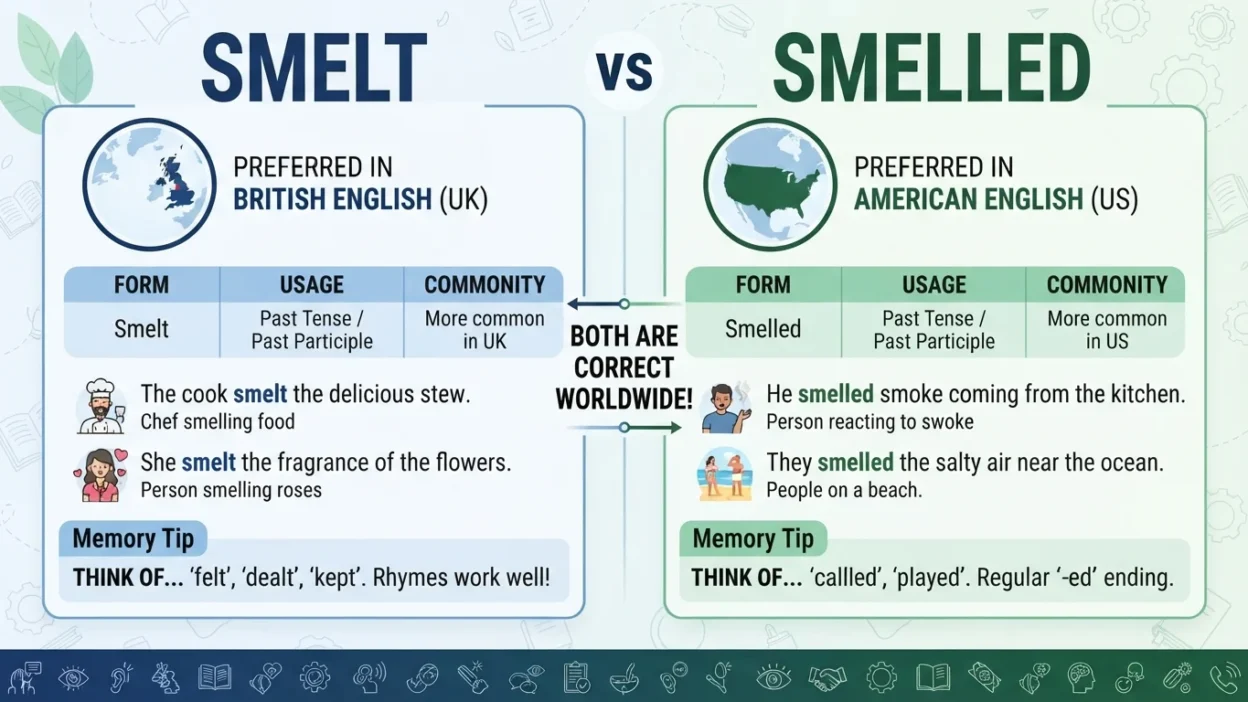
The simple answer is that both smelt and smelled are correct past tense and past participle forms of the verb smell. The difference mainly depends on the variety of English you are using and the writing style you prefer.
This guide explains the difference between smelt or smelled, shows when each form is appropriate, and includes examples to help you choose the right one with confidence.
Quick Answer
| Question | Answer |
|---|---|
| Are both correct? | Yes |
| More common in American English | Smelled |
| More common in British English | Smelt |
| Meaning | Past tense and past participle of smell |
| Safe choice for international writing | Smelled |
What Do Smelt and Smelled Mean?
Both smelt and smelled are used as the past tense and past participle of the verb smell.
They describe noticing or detecting an odor in the past.
For example:
- I smelled fresh bread this morning.
- I smelt smoke coming from the kitchen.
The meaning is exactly the same in both sentences.
Is It Smelt or Smelled?
Both spellings are correct.
The biggest difference is regional usage.
- Smelled is more common in American English.
- Smelt is more common in British English, Australian English, and some other Commonwealth varieties.
If you’re writing for an international audience, smelled is generally the more widely recognized choice.
Smelt vs Smelled in American and British English
Regional spelling preferences often influence which form sounds more natural.
| English Variety | Preferred Form |
|---|---|
| American English | Smelled |
| British English | Smelt |
| Australian English | Smelt |
| Canadian English | Both are used |
| International English | Smelled is often preferred |
Neither form is incorrect. The best choice depends on your audience.
When Should You Use Smelled?
Use smelled when writing for American readers or in formal international writing.
It commonly appears in:
- News articles
- Academic writing
- Business communication
- School assignments
- Professional documents
Example Sentences
- She smelled fresh coffee before entering the café.
- I smelled gas and immediately opened the windows.
- We smelled flowers while walking through the garden.
When Should You Use Smelt?
Use smelt when following British English spelling and grammar conventions.
It is common in:
- British newspapers
- UK novels
- British schools
- Everyday conversations in the UK
Example Sentences
- He smelt smoke outside the building.
- We smelt fresh rain in the air.
- She smelt perfume as she entered the room.
Smelt vs Smelled Comparison
Although both forms are correct, choosing the right one depends on the English variety you are using.
| Feature | Smelt | Smelled |
|---|---|---|
| Meaning | Past tense of smell | Past tense of smell |
| British English | Preferred | Also accepted |
| American English | Less common | Preferred |
| Formal writing | Yes | Yes |
| Everyday conversation | Common in the UK | Common in the US |
Common Mistakes to Avoid
Many learners think one form is always wrong. That is not true.
Avoid these common mistakes:
- Assuming smelt is incorrect.
- Thinking smelled is only American slang.
- Mixing smelt and smelled in the same document without following one style.
- Forgetting to match the spelling with your target audience.
Consistency is more important than choosing one form over the other.
Real-Life Examples
Here are a few everyday examples that show how both forms work naturally.
- I smelled fresh cookies as I walked past the bakery.
- We smelt smoke before the fire alarm sounded.
- She smelled roses in the garden during spring.
- They smelt something unusual in the laboratory.
Each sentence is grammatically correct. The preferred version simply depends on regional English.
Interesting Facts
| Fact | Explanation |
|---|---|
| Both forms are correct | Dictionaries accept both smelt and smelled. |
| Same meaning | They both describe noticing a smell in the past. |
| Regional difference | American English usually prefers smelled, while British English often prefers smelt. |
| No meaning change | The choice does not affect the meaning of the sentence. |
| Style matters | Professional writing usually follows the preferred form of the chosen English variety. |
Future Outlook
Both smelt and smelled are expected to remain standard English forms.
Because English is used around the world, regional preferences will continue. American publications will likely keep favoring smelled, while British publishers will continue using smelt. Neither form is likely to replace the other completely.
Frequently Asked Questions
Is it smelt or smelled?
Both smelt and smelled are correct. Smelled is more common in American English, while smelt is preferred in British English.
Is smelt grammatically correct?
Yes. Smelt is a correct past tense and past participle of smell, especially in British English.
Should I use smelled in American English?
Yes. Smelled is the standard choice in American English and is commonly used in schools, businesses, books, and news publications.
Do smelt and smelled have different meanings?
No. They have exactly the same meaning. Both describe noticing or detecting a smell in the past.
Which form should I use in formal writing?
Use the form that matches your audience. Choose smelled for American English and smelt for British English. Staying consistent throughout your writing is the most important rule.
Final Thoughts
Choosing between smelt or smelled is mostly about regional English rather than grammar. Both forms are correct and express the same meaning. If you’re writing for an American audience, smelled is usually the best choice. For British readers, smelt feels more natural. Understanding your audience and using one style consistently will make your writing clear, accurate, and professional.

Robert Parker is a U.S.-based author at Aslikee who is dedicated to producing accurate and trustworthy content for readers. He focuses on presenting information in a clear and organized way, making complex topics easier to understand.
He values thorough research and careful fact-checking to ensure every piece of content meets high quality standards. Robert believes that consistency and reliability are essential for building long-term reader trust.
At Aslikee, Robert plays an important role in supporting editorial quality and content improvement. His goal is to help users access useful, well-structured information that adds real value to their experience.