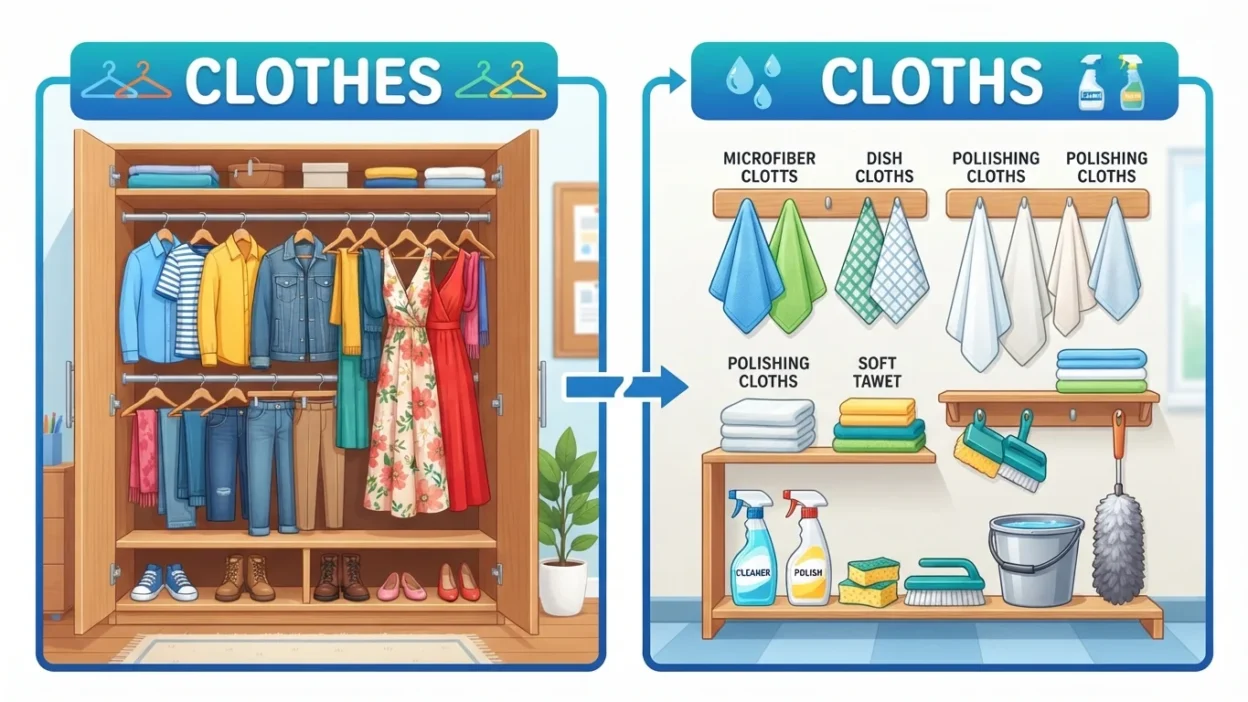
When learning cloths or clothes, many English learners confuse these similar words because they look alike but have different meanings in daily use. Clothes are garments that people wear, such as shirts and pants, while cloths are pieces of fabric used for wiping, cleaning, or crafting. From my experience, these English word pairs are among the most common words that people confuse because of their similar spelling but different meanings.
A simple way to remember the difference is that clothes belong in your wardrobe, while cloths belong with your cleaning supplies or craft materials. Understanding this distinction helps you choose the correct word in both writing and everyday conversations.
Quick Answer
| Word | Meaning | Example |
|---|---|---|
| Clothes | Garments people wear | She bought new clothes yesterday. |
| Cloths | Pieces of fabric used for cleaning or other tasks | Use a soft cloth to clean the screen. |
What Is the Difference Between Cloths and Clothes?
The biggest difference is their meaning.
- Clothes refers to everything you wear, such as shirts, pants, dresses, jackets, shoes, and other garments.
- Cloths is the plural of cloth, meaning pieces of fabric that are used for cleaning, wiping, polishing, cooking, sewing, or crafting.
Although the spelling differs by only one letter, they are never interchangeable.
Comparison Table
| Feature | Clothes | Cloths |
|---|---|---|
| Meaning | Garments | Pieces of fabric |
| Used For | Wearing | Cleaning, wiping, crafting |
| Part of Speech | Plural noun | Plural noun |
| Related Word | Clothing | Cloth |
What Does “Clothes” Mean?
The word clothes refers to items that people wear to cover or protect their bodies. It includes everyday outfits as well as uniforms, formal wear, sportswear, and seasonal clothing.
Examples include:
- Shirts
- Pants
- Dresses
- Jackets
- Socks
- Shoes
- Sweaters
Example Sentences
- I bought new clothes for school.
- Her clothes were neatly folded.
- Winter clothes keep you warm.
What Does “Cloths” Mean?
The word cloths is simply the plural form of cloth.
A cloth is a piece of fabric used for practical purposes instead of wearing.
Common examples include:
- Cleaning cloths
- Kitchen cloths
- Dust cloths
- Dish cloths
- Polishing cloths
- Microfiber cloths
Example Sentences
- Use clean cloths to wash the windows.
- The mechanic kept several cloths in the workshop.
- Soft cloths prevent scratches while cleaning.
Why People Confuse Cloths and Clothes
These words sound somewhat similar and differ by only one letter in spelling.
Many learners read them quickly and assume they have the same meaning. In spoken English, the pronunciation is also slightly different, making confusion even more common.
Once you connect clothes = wear and cloths = fabric for cleaning, remembering the difference becomes much easier.
Easy Memory Trick
Here’s a simple trick:
- Clothes → You wear them.
- Cloths → You wipe with them.
Thinking about the action helps you choose the correct word every time.
Cloths vs Clothes Comparison
The easiest way to remember the difference is to compare the two words side by side. Although they look almost identical, their meanings are completely different.
| Feature | Cloths | Clothes |
|---|---|---|
| Meaning | Pieces of fabric | Garments you wear |
| Used For | Cleaning, wiping, polishing, crafting | Dressing your body |
| Example | Cleaning cloth | Winter clothes |
| Related Word | Cloth | Clothing |
Common Examples of Clothes
The word clothes includes almost everything you wear every day. Whether you’re getting ready for school, work, or a special event, you’re putting on clothes.
Examples include:
| Clothes Examples |
|---|
| Shirts |
| Pants |
| Dresses |
| T-shirts |
| Jeans |
| Jackets |
| Sweaters |
| Shoes |
| Socks |
| Hats |
Example Sentences
- She packed enough clothes for her vacation.
- My new clothes arrived this morning.
- These clothes are perfect for cold weather.
Common Examples of Cloths
Cloths are useful household items made from fabric. They are designed for cleaning, polishing, drying, or crafting rather than wearing.
| Cloths Examples |
|---|
| Dish cloth |
| Cleaning cloth |
| Dust cloth |
| Washcloth |
| Microfiber cloth |
| Polishing cloth |
| Kitchen cloth |
Example Sentences
- Keep separate cloths for cleaning the kitchen.
- I used soft cloths to polish the furniture.
- The painter wiped the brush with old cloths.
Cloths or Clothes in Everyday English
Native English speakers use clothes much more often than cloths because talking about clothing is part of everyday conversation.
You may hear:
- I need new clothes.
- Fold your clothes.
- Wash your clothes.
Meanwhile, cloths usually appears when discussing cleaning supplies, household chores, or crafts.
Most Common Mistakes
Many learners accidentally replace one word with the other.
Incorrect vs Correct
| Incorrect | Correct |
|---|---|
| I bought new cloths yesterday. | I bought new clothes yesterday. |
| Please wash your cloths before school. | Please wash your clothes before school. |
| Use clean clothes to wipe the table. | Use clean cloths to wipe the table. |
| The dish clothes are dirty. | The dish cloths are dirty. |
Tips to Never Confuse Them Again
Learning vocabulary becomes easier when you connect each word with a picture in your mind.
- Think of clothes hanging in a wardrobe.
- Think of cloths lying beside a sink.
- Associate clothes with fashion.
- Associate cloths with cleaning.
- Practice writing both words in different sentences.
These small habits help build long-term memory.
Real-Life Example
Imagine you tell someone:
“I need new cloths.”
A native English speaker may wonder why you need new cleaning rags instead of new outfits.
But if you say:
“I need new clothes.”
Everyone immediately understands that you’re talking about garments to wear.
That single letter changes the meaning completely.
Frequently Asked Questions
Is it cloths or clothes?
It depends on what you mean. Clothes are garments that people wear, while cloths are pieces of fabric used for cleaning, wiping, polishing, or crafting.
Why do people confuse cloths and clothes?
The words look almost identical and have similar pronunciation. However, they describe completely different things, making them one of the most commonly confused English word pairs.
Is “cloths” a real English word?
Yes. Cloths is the plural form of cloth. It refers to multiple pieces of fabric used for household tasks, cleaning, or other practical purposes.
What is the plural of cloth?
The correct plural of cloth is cloths.
Example:
- I bought several cleaning cloths for the kitchen.
What is another word for clothes?
Some common synonyms include:
- Clothing
- Apparel
- Garments
- Outfit
- Attire
- Wear
These words generally refer to items people wear.
Common Synonyms
| Word | Similar Meaning |
|---|---|
| Clothes | Clothing |
| Clothes | Garments |
| Clothes | Apparel |
| Clothes | Attire |
| Cloth | Fabric |
| Cloth | Material |
| Cloth | Textile |
Quick Practice Quiz
Choose the correct word.
- I bought new ______ for winter.
- ✅ Clothes
- Use soft ______ to clean the mirror.
- ✅ Cloths
- My school ______ are ready for tomorrow.
- ✅ Clothes
- The kitchen ______ should be washed every day.
- ✅ Cloths
- She folded her ______ before putting them away.
- ✅ Clothes
Final Tips to Remember
If the item goes into your wardrobe, the correct word is clothes.
If the item is used for cleaning, drying, polishing, or crafting, the correct word is cloths.
A simple memory trick is:
- Clothes = Wear
- Cloths = Wipe
Once you remember this connection, choosing the correct word becomes much easier.
Final Thoughts
Although cloths and clothes differ by only one letter, they have completely different meanings. Clothes always refer to garments that people wear, while cloths refer to pieces of fabric used for practical tasks like cleaning or polishing. Learning this distinction will improve both your writing and spoken English, helping you avoid one of the language’s most common vocabulary mistakes.

Robert Parker is a U.S.-based author at Aslikee who is dedicated to producing accurate and trustworthy content for readers. He focuses on presenting information in a clear and organized way, making complex topics easier to understand.
He values thorough research and careful fact-checking to ensure every piece of content meets high quality standards. Robert believes that consistency and reliability are essential for building long-term reader trust.
At Aslikee, Robert plays an important role in supporting editorial quality and content improvement. His goal is to help users access useful, well-structured information that adds real value to their experience.