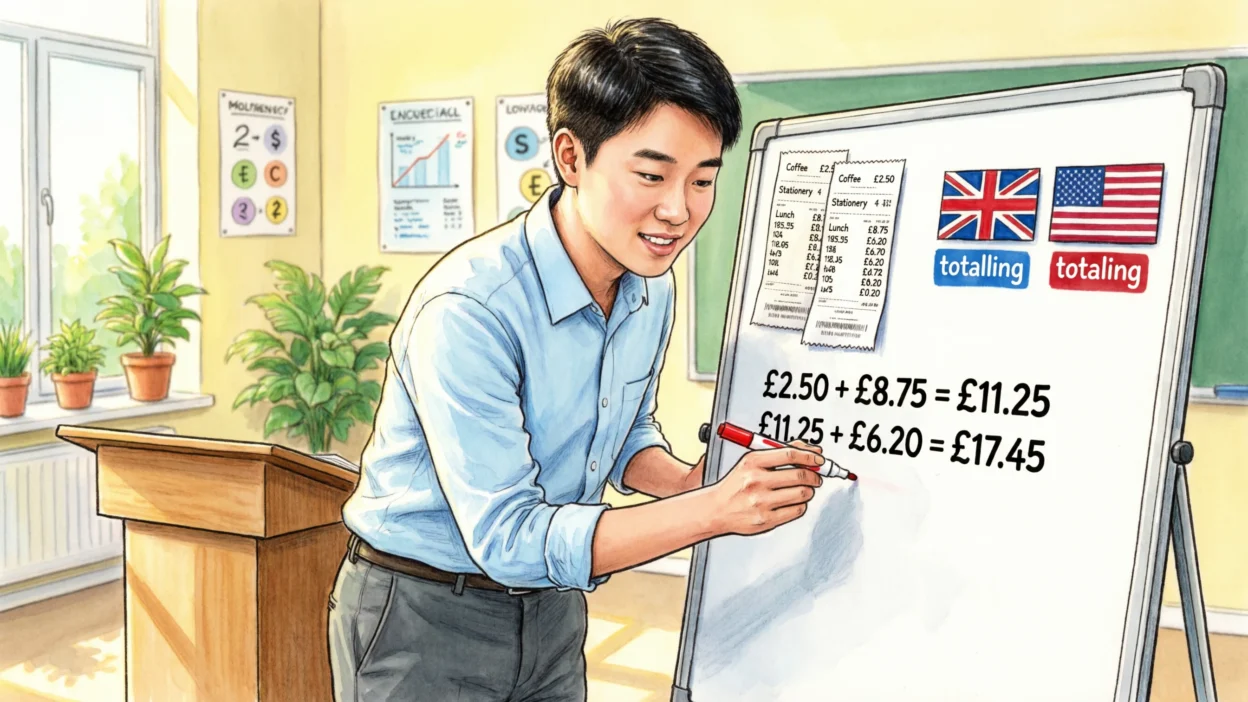
Many English learners wonder whether they should write “totalling” or “totaling.” Since both spellings appear in books, websites, and business documents, it can feel confusing.
The simple answer is:
👉 Both “totalling” and “totaling” are correct.
The difference depends mainly on the type of English being used:
- Totaling is the American English spelling.
- Totalling is the British English spelling.
👉 For example:
- The expenses are totaling $500. 🇺🇸
- The expenses are totalling £500. 🇬🇧
Both words have the same meaning and pronunciation.
What Does “Totaling” Mean?
Totaling is the present participle of total in American English.
👉 It means:
- Adding up to a final amount
- Calculating a total
Examples:
- The bill is totaling $100.
- She is totaling the costs.
- The damages are totaling thousands of dollars.
- We are totaling the scores.
What Does “Totalling” Mean?
Totalling has the same meaning as totaling.
👉 This spelling is mainly used in British English.
Examples:
- The expenses are totalling £300.
- He is totalling the figures.
- The repairs are totalling a large amount.
- They are totalling the results.
Totalling vs Totaling (Quick Comparison)
| Word | Type of English | Meaning |
|---|---|---|
| Totaling | American English | Adding up to a total |
| Totalling | British English | Adding up to a total |
👉 Important:
Both spellings are correct.
Sentence Examples
Using “Totaling”
- The costs are totaling more than expected.
- She is totaling the receipts.
- The losses are totaling millions.
Using “Totalling”
- The bills are totalling £1,000.
- He spent the evening totalling the accounts.
- The numbers are totalling correctly.
Common Mistakes
❌ She totaling the receipts yesterday.
✔️ She was totaling the receipts yesterday.
✔️ She was totalling the receipts yesterday.
❌ The expenses totaling $500 yesterday.
✔️ The expenses were totaling $500 yesterday.
👉 Remember:
- American English → totaling
- British English → totalling
Practice Time
Fill in the blanks:
- She is ______ the expenses.
- The damages are ______ thousands of dollars.
- He spent hours ______ the figures.
- We are ______ the scores.
- The costs are ______ more than expected.
Answers:
- totaling / totalling
- totaling / totalling
- totaling / totalling
- totaling / totalling
- totaling / totalling
Easy Memory Trick
👉 Think like this:
- British English often doubles the final l before adding -ing.
Examples:- travelling
- cancelling
- totalling
- American English often keeps a single l.
Examples:- traveling
- canceling
- totaling
Final Thought
Both totalling and totaling are correct spellings with the same meaning. The difference is simply regional style, with totaling used in American English and totalling used in British English.
Understanding these spelling variations can help you write more naturally for different audiences and improve your confidence in English grammar and business writing.

Robert Parker is a U.S.-based author at Aslikee who is dedicated to producing accurate and trustworthy content for readers. He focuses on presenting information in a clear and organized way, making complex topics easier to understand.
He values thorough research and careful fact-checking to ensure every piece of content meets high quality standards. Robert believes that consistency and reliability are essential for building long-term reader trust.
At Aslikee, Robert plays an important role in supporting editorial quality and content improvement. His goal is to help users access useful, well-structured information that adds real value to their experience.