Many English learners get confused by dryer or drier because the words look almost the same. The only difference is one letter, but they have completely different meanings.
If you’ve ever wondered whether to write dryer or drier, you’re not alone. This is a common spelling question because both words come from the adjective dry but are used in different ways.
The good news is that the rule is easy to remember. Once you know when each word is used, you’ll be able to write with confidence in everyday conversations, school assignments, and professional writing.
Quick Answer
| Word | Meaning | Part of Speech | Example |
|---|---|---|---|
| Dryer | A machine used to dry things | Noun | I put the clothes in the dryer. |
| Drier | More dry; less wet | Comparative adjective | The weather is drier today. |
What Is the Difference Between Dryer and Drier?
The difference between dryer and drier depends on how the word is being used.
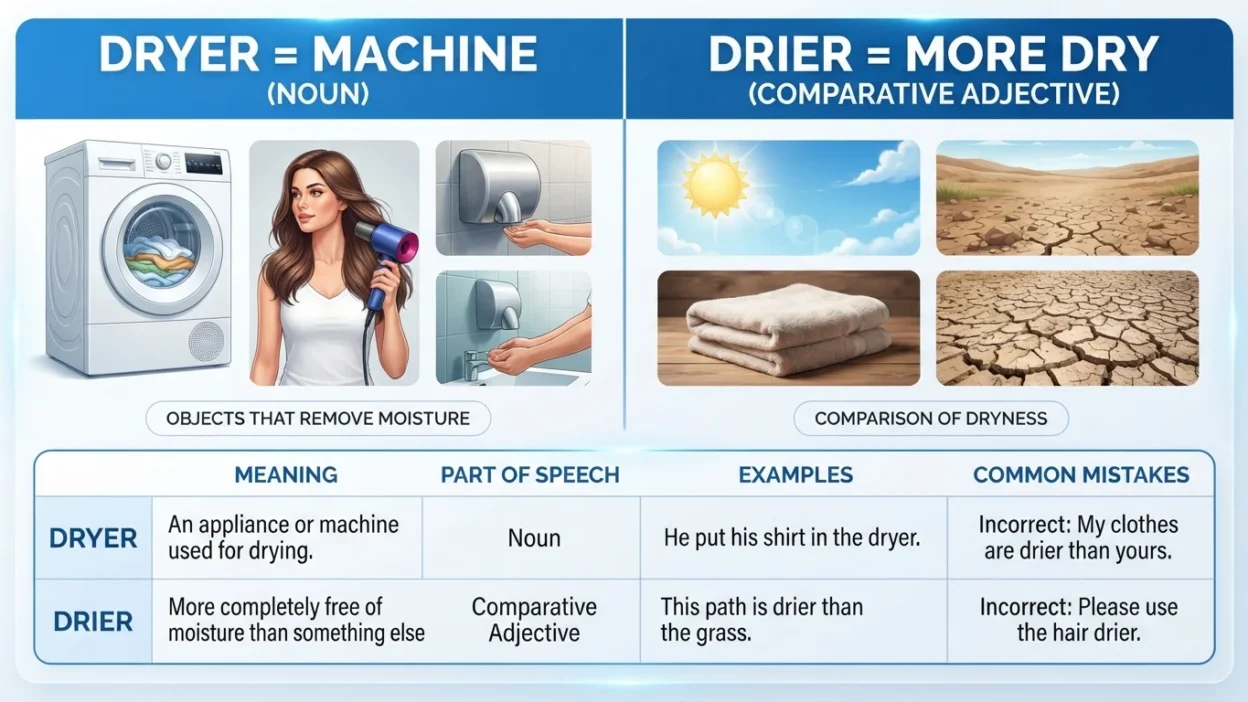
- Dryer is a noun. It refers to a machine or appliance that dries clothes, hair, or other items.
- Drier is the comparative form of the adjective dry. It means more dry or less wet.
Although they sound almost identical, they have completely different jobs in a sentence.
Quick Comparison
| Feature | Dryer | Drier |
|---|---|---|
| Part of speech | Noun | Comparative adjective |
| Meaning | Drying machine | More dry |
| Refers to | Appliance or device | Weather, objects, materials, climate |
| Everyday use | Laundry, hair care | Describing conditions |
When to Use Dryer
Use dryer whenever you mean a machine or appliance that removes moisture.
Common examples include:
- Clothes dryer
- Hair dryer
- Hand dryer
- Food dryer
- Industrial dryer
Examples
- I forgot my clothes in the dryer.
- She uses a hair dryer every morning.
- The hotel installed a new hand dryer.
- The dryer finished the cycle quickly.
- Our old dryer stopped working last week.
From my experience, whenever you can replace the word with machine, dryer is almost always the correct choice.
When to Use Drier
Use drier when comparing two things and saying one has less moisture than the other.
Examples
- Today’s weather is drier than yesterday’s.
- This towel feels much drier now.
- The soil became drier after a week without rain.
- My skin gets drier during winter.
- The paint looks drier after several hours.
Easy Trick to Remember the Difference
A simple memory trick can help you choose the correct word every time.
- Dryer = Machine
- Drier = More dry
Ask yourself this question:
Am I talking about an appliance or comparing how dry something is?
If it is an appliance, use dryer. If you are comparing moisture levels, use drier.
Common Mistakes People Make
Many writers confuse these words because they sound very similar.
Incorrect vs Correct
| Incorrect | Correct |
|---|---|
| The weather is dryer today. ❌ | The weather is drier today. ✅ |
| Put the towels in the drier. ❌ | Put the towels in the dryer. ✅ |
| My skin becomes dryer in winter. ❌ | My skin becomes drier in winter. ✅ |
| The drier stopped working. ❌ | The dryer stopped working. ✅ |
The easiest way to avoid mistakes is to remember that only a machine is called a dryer.
Dryer vs Drier in Everyday English
You’ll probably use dryer when talking about household appliances.
Examples include:
- Clothes dryer
- Hair dryer
- Hand dryer
- Food dryer
You’ll use drier when describing weather, climate, skin, towels, paint, soil, wood, or anything becoming less wet.
Real-Life Examples
| Sentence | Correct Word |
|---|---|
| I bought a new hair _____. | Dryer |
| This summer feels much _____. | Drier |
| The towels stayed in the _____. | Dryer |
| The desert climate is much _____. | Drier |
| My hands become _____ in cold weather. | Drier |
| The repair technician fixed the _____. | Dryer |
Why the Confusion Happens
The confusion exists because both words come from the adjective dry.
One became a noun (dryer) to name a machine, while the other stayed the comparative adjective (drier) used to compare moisture.
Since they are pronounced almost the same, many people accidentally choose the wrong spelling when writing.
Related Words
| Word | Meaning |
|---|---|
| Dry | Not wet |
| Drying | The process of removing moisture |
| Dryness | The condition of being dry |
| Moist | Slightly wet |
| Wet | Covered with water |
| Humid | Having a lot of moisture in the air |
| Arid | Extremely dry |
Understanding these related words can make it even easier to remember when to use dryer and drier correctly.
Frequently Asked Questions
Is it dryer or drier?
Both are correct, but they have different meanings. Dryer is a machine that dries things, while drier means more dry or less wet.
Is dryer a noun?
Yes. Dryer is a noun because it names a device or appliance, such as a clothes dryer, hair dryer, or hand dryer.
Is drier an adjective?
Yes. Drier is the comparative form of the adjective dry. It compares two things by showing that one has less moisture than the other.
Can I say “the weather is dryer”?
No. The correct sentence is “The weather is drier.” Since you are comparing weather conditions, you need the comparative adjective drier.
How do I remember the difference between dryer and drier?
A simple trick is:
- Dryer = Machine
- Drier = More dry
If you can replace the word with appliance, use dryer. If you mean less wet, use drier.
Final Thoughts
Choosing between dryer or drier becomes easy once you know the role each word plays. Use dryer when talking about a machine that removes moisture, and use drier when comparing how dry something is. This small spelling difference can make your writing clearer and more accurate, whether you’re describing the weather, talking about laundry, or writing professionally.

William Cooper is a U.S.-based content writer at Aslikee who focuses on creating clear, informative, and user-friendly content. He is committed to delivering information that is accurate, practical, and easy for readers to understand.
He believes that strong content comes from careful research and attention to detail. William takes time to ensure that each article meets quality standards and provides real value to users.
At Aslikee, William contributes to maintaining editorial consistency and improving content quality. His goal is to support readers with reliable information and help build long-term trust in the platform.